



Behind every memorable villa is an architect who decides where the walls fall, where the light enters and how the sea comes into the room. At Kerem Villas, that architect is Gary Fell, the designer of the Cap Karoso resort in Sumba and of private villas across Bali, Thailand and beyond. His work combines innovation, sustainability and refined minimalism, and it appeals to travellers who value luxury, tranquillity and sophistication. This guide covers his background, the principles behind his villas and the way those principles shape a stay at Kerem.
From London to Bali
Gary Fell trained at the Bartlett School of Architecture at University College London and completed his postgraduate studies in 1994. His work on the Four Seasons Sayan project in Ubud brought him to Bali, where further residential commissions followed. In 1999 he founded GFAB Architects, which remains based on the island.

The studio has around 30 staff and designs hotels, resorts and bespoke residences across Indonesia, Thailand, Vietnam, Sri Lanka and India, with current projects also in Turkey, Cambodia and Australia. Every commission begins with the site itself: its slope, its outlook and the materials of the surrounding region.
A Style Built Around the Landscape
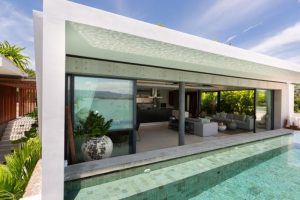
Fell’s architecture unites the modern interior with its surroundings and dissolves the boundary between indoor and outdoor living. His philosophy rests on embracing nature, working with natural elements and drawing the greatest possible benefit from panoramic views, so that every space feels serene and luxurious at once. Three principles recur across his villas.
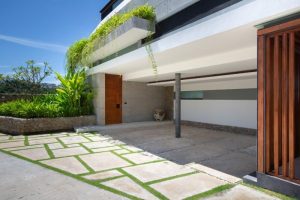
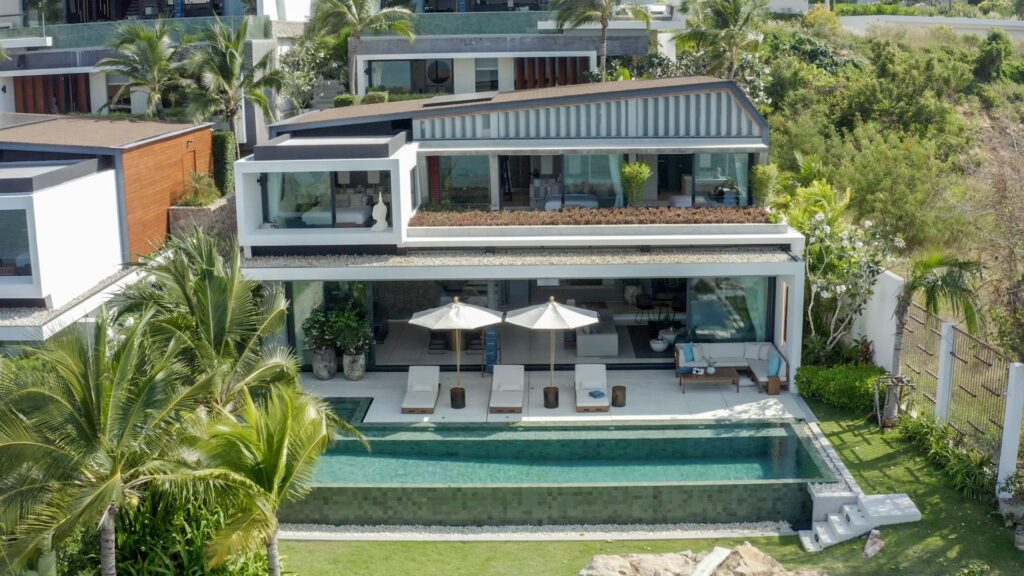
The building follows the land. Rather than levelling a site, Fell lets the architecture respond to its slopes, rocks and vegetation. Grassed roofs, planted terraces and natural stone allow each building to settle into the scenery instead of competing with it, while open-plan layouts and expansive glass walls frame the view and draw the outdoors in.
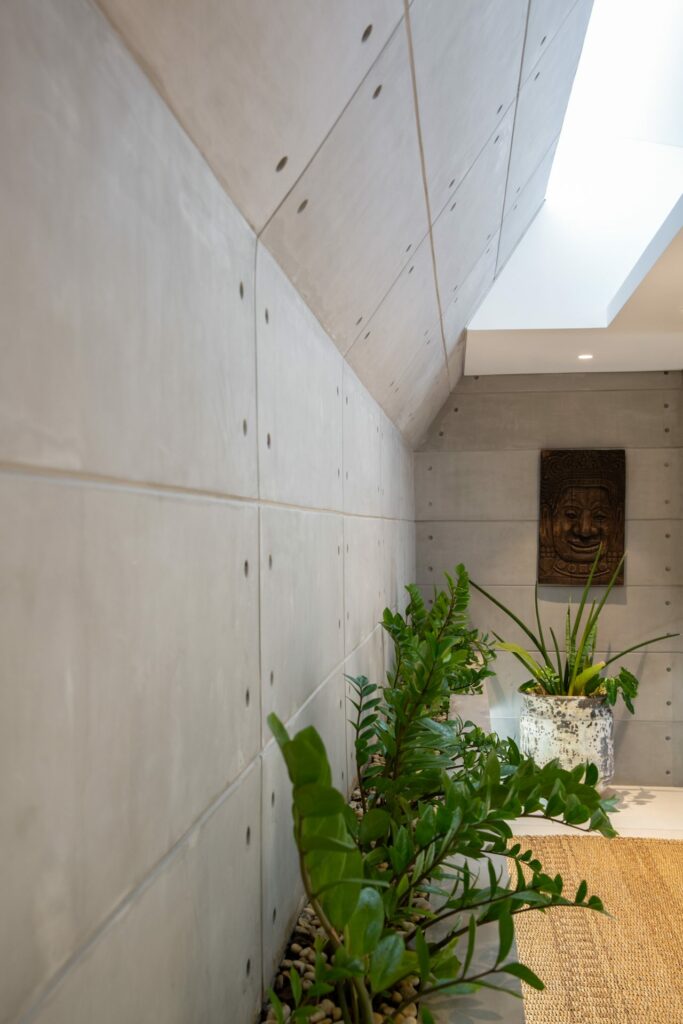
Local materials do the work. Materials are chosen to complement the surroundings and sharpen them: locally sourced timber and stone, woven textures and raw concrete, set against sleek modern finishes. The result is a sense of place that an imported palette could not achieve.
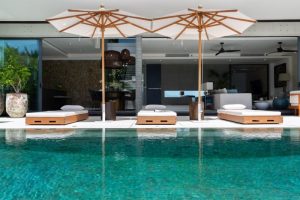
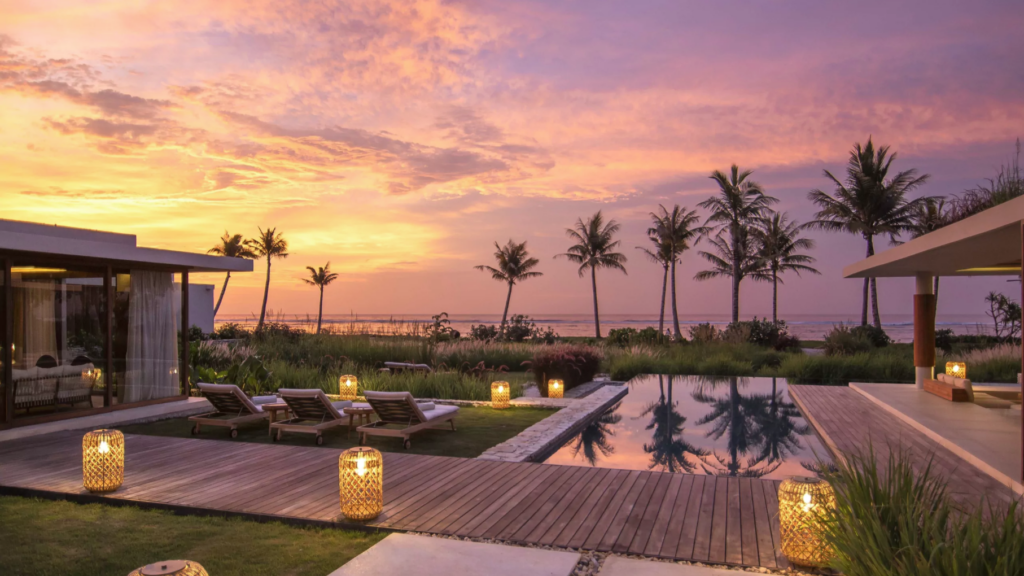
Inside and outside become one space. Living areas open completely onto decks, pools and gardens, so that a day in the villa moves between room and landscape without a hard line between the two. The tropical climate becomes part of the architecture rather than something to be kept at a distance.
Fell’s Work Across Asia
Koh Samui is one chapter in a career spread across the region. On the island, Fell is best known for the Samujana resort on the Choeng Mon peninsula, alongside Kerem. In Indonesia, Fell is the design principal of Cap Karoso, a beachfront resort on the island of Sumba. The 2.7-hectare site faces west, and its 67 suites and villas follow the contours of the land so that every unit enjoys sea views. Simple concrete forms are paired with local stone, timber and woven details, the main roof doubles as a solar farm, and the resort won the Resort category at the 2023 AHEAD Asia awards.
Closer to the Bali studio, The Iman in Canggu applies the same ideas at the scale of a single home. On a gently sloping site among rice paddies, the subdivision’s developer required single-storey construction, so the architects tucked two bedrooms into the roof pitch to leave more land free for lawns and play areas. A steep roof of locally made terracotta tiles forms much of the entrance, planted terraces create an internal landscape, and a 25-metre pool divides the house into two blocks. The palette is deliberately short: local stone, timber and rough shuttered concrete.
The portfolio also includes further villas across Bali, Lombok and Phuket, the Dialoog hotels in Bali and Flores, and Haritha Boutique Resort and Spa in Sri Lanka. The common thread is a restful, nature-led luxury suited to the tropics.
Kerem Villas: A Gary Fell Design on the Beach
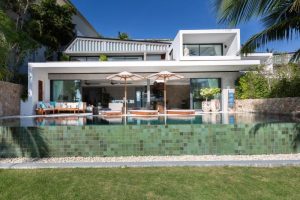
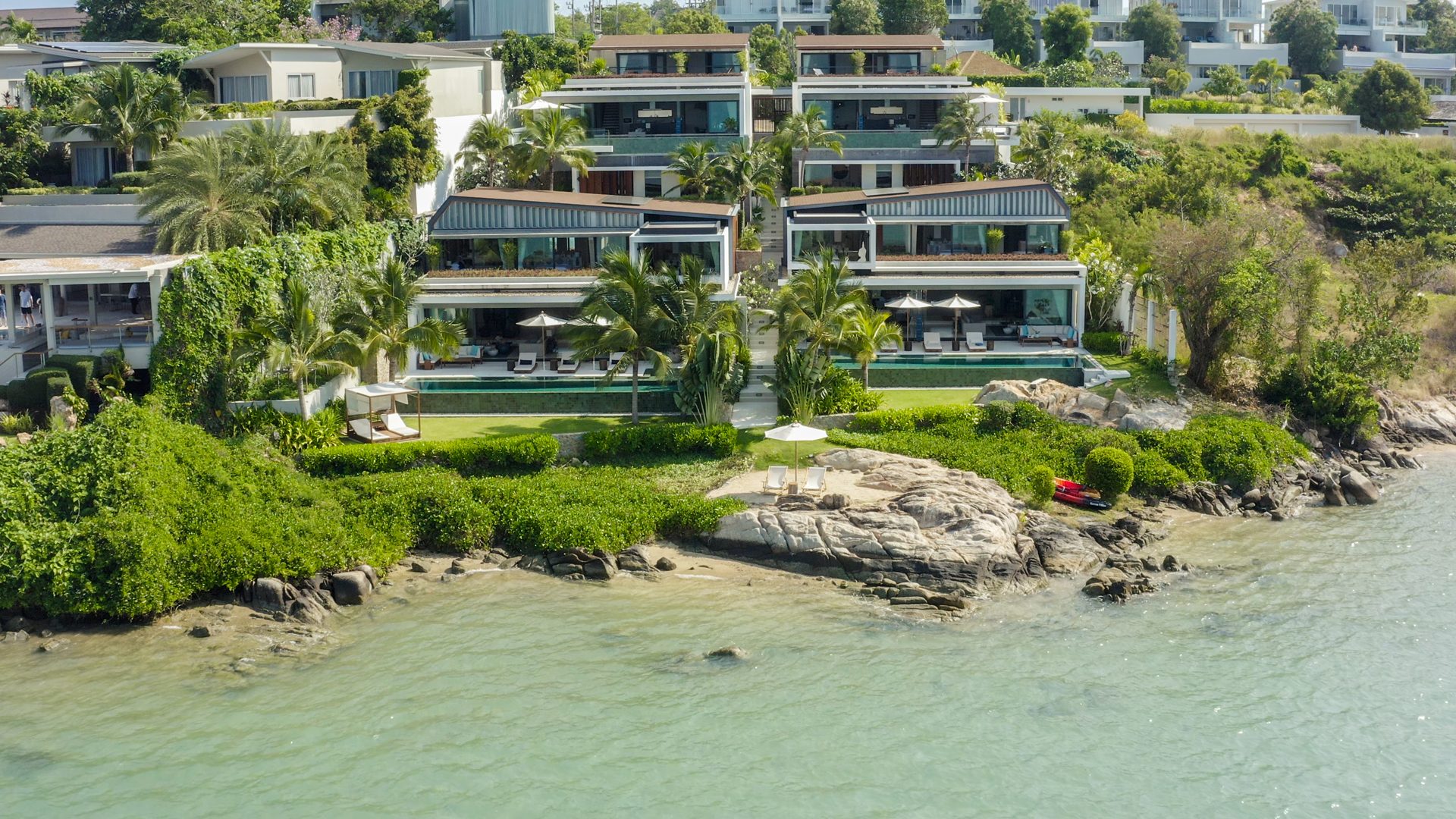
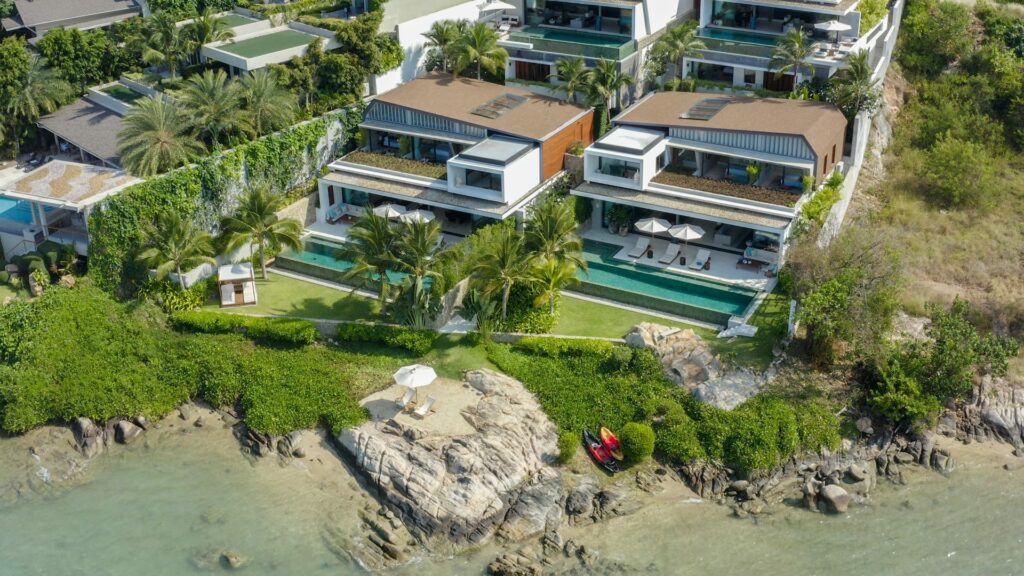
Kerem Villas brings this approach to a small, private setting on the north-east coast of Koh Samui. There are four three-bedroom villas: Solaris and Syrah on the beachfront, and Muscat and Gamay on the terrace above, each with beach access.
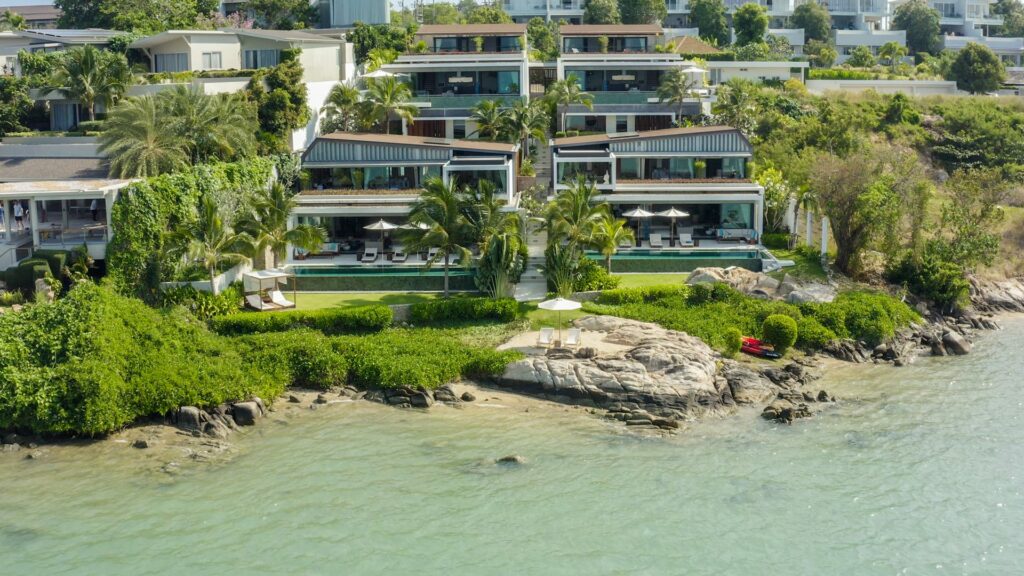
The setting reinforces the architecture. The estate overlooks the bay at Plai Laem, around a ten-minute drive from Fisherman’s Village and Chaweng, yet it feels entirely secluded. The villas sit on a terraced slope above the water, and boulders, lawns and planted terraces soften the transition between building and shore, in keeping with Fell’s principle of working with the land rather than against it.
The Fell design principles are visible in the way the villas work from day to day:
- Full-height glass and a sea view from every room, so the water is part of the villa in each bedroom, in the living room and on the deck.
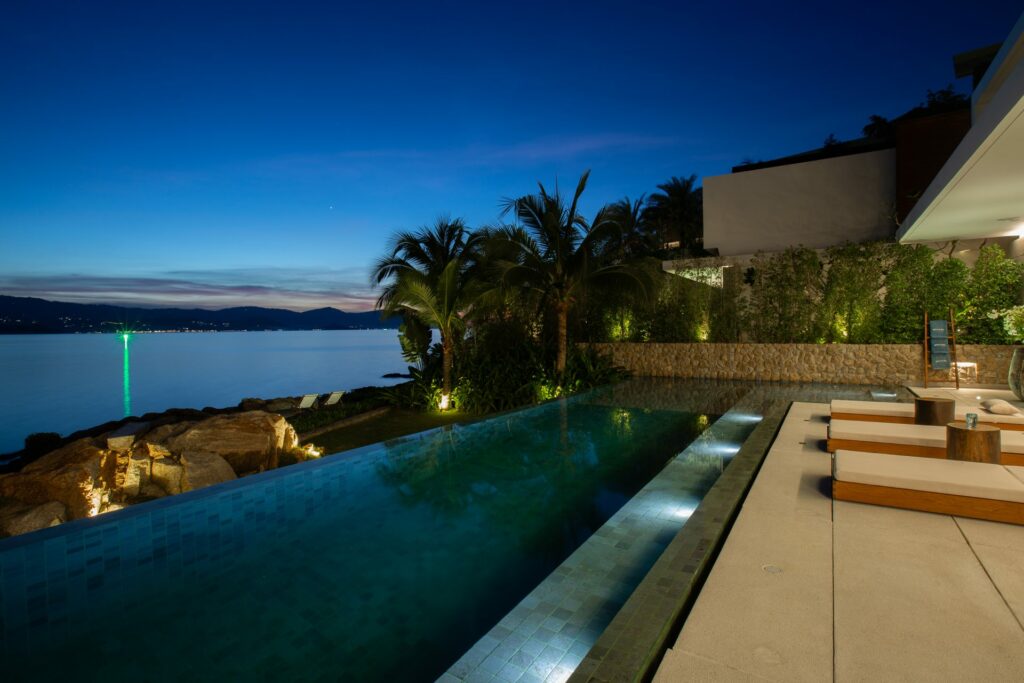
- Open living spaces that run straight onto a large deck and a private infinity pool.
- Locally made handicrafts and art alongside designer furniture, giving the interiors a Thai character.
- A boutique scale, with only four villas sharing the beach, gym and kayaks.
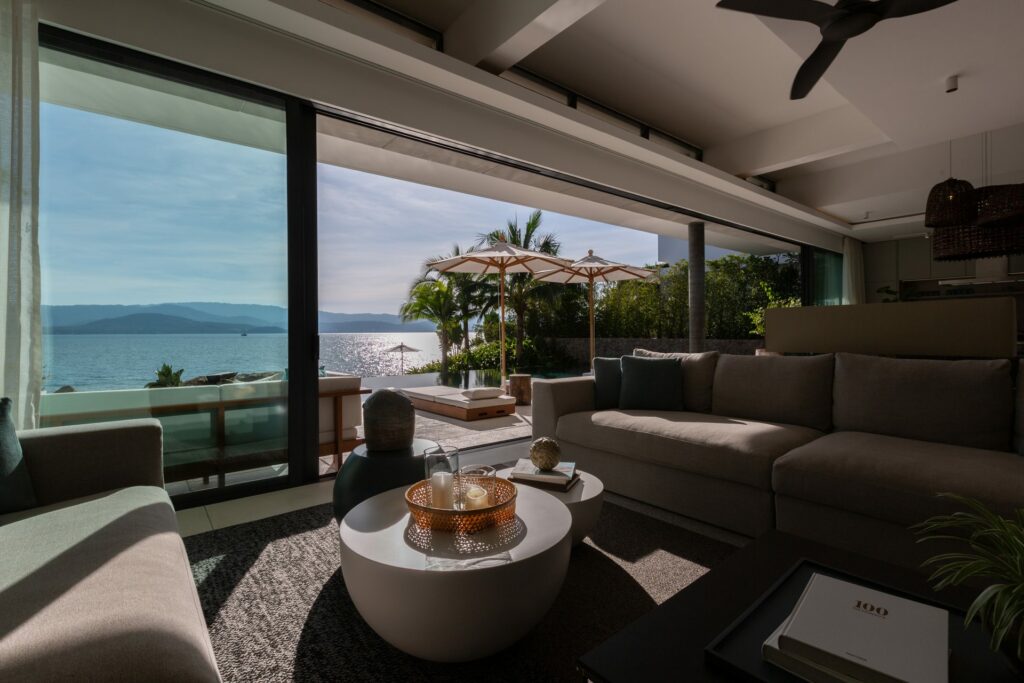
Kerem Villas stands among the finest expressions of Fell’s villa design: calm, elegant residences where the architecture steps back and lets the sea take centre stage. For many guests this is the real appeal of a Fell villa, an immersive experience of nature in which the line between the built and the natural world softens. The Michelin Guide has awarded Kerem Luxury Beachfront Villas one Michelin Key, its hotel distinction for “a very special stay”, and notes the full-length windows that frame the sea views.
See the Design for Yourself
Photographs only go so far. Guests who wish to experience a Gary Fell villa on the sand can book direct with the Kerem Villas team, who also arrange private chefs, in-villa massage and other experiences around the stay.